On this page
- Clean only a cool cooktop; cleaner on a hot one can give off harmful fumes and damage the glass. 1
- Metal marks from aluminum or copper-clad pans can become permanent if left. 12
- Burned-on soil: cream and a pad, then a razor scraper held at 30 degrees. 1
- Sugar and plastic must come off at once, scraped from the hot surface with a mitt. 1
- Never use bleach, ammonia, oven cleaner, scouring pads, dirty cloths or foil. 1
How do I clean a Kenmore glass cooktop?#
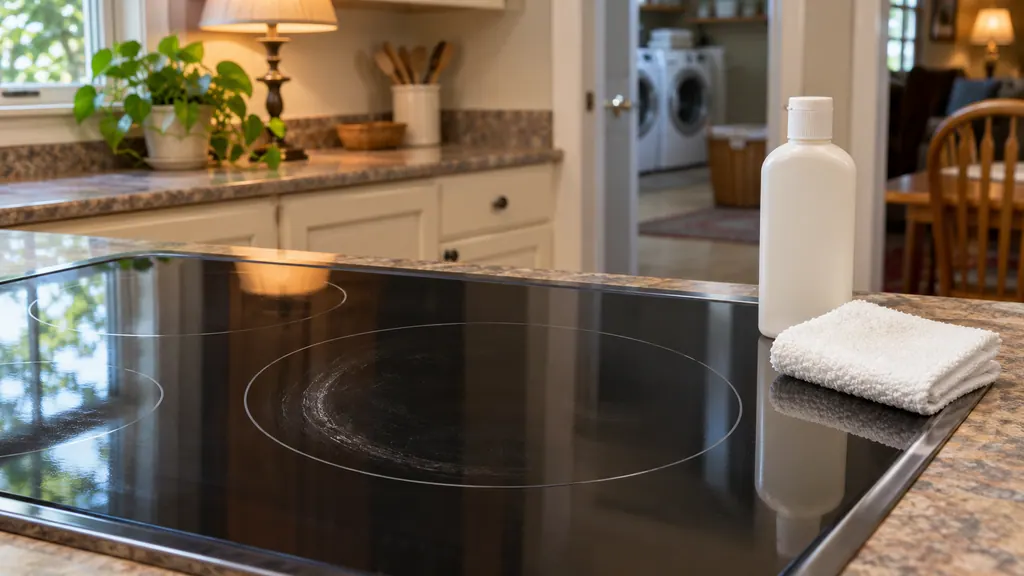
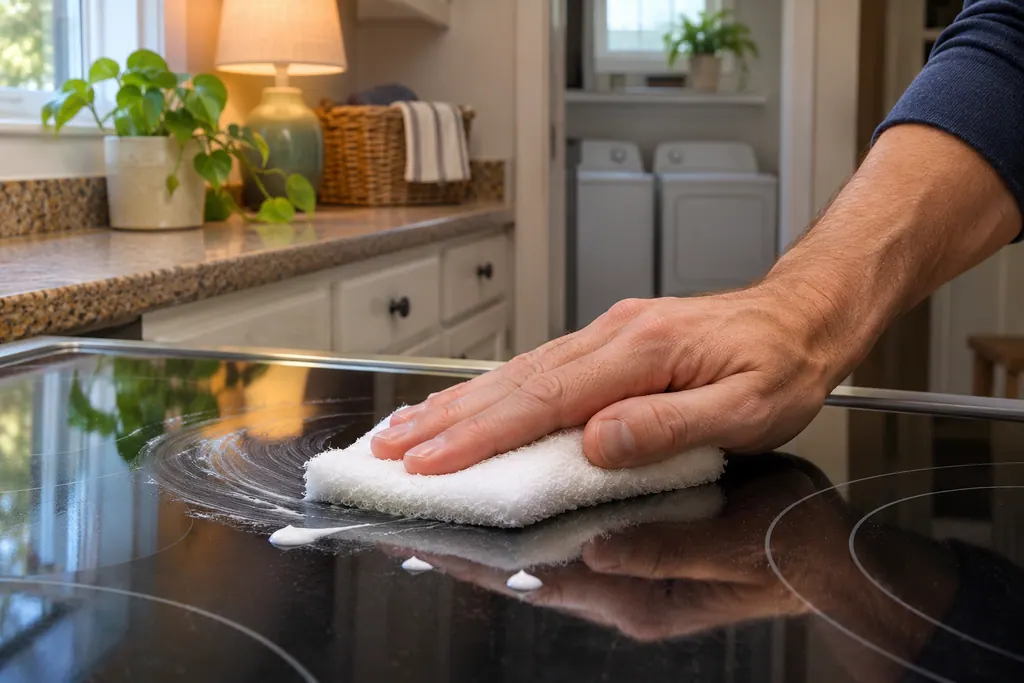
Wait until it is cool, put a few drops of ceramic-glass cooktop cleaning cream on the surface and rub with a paper towel or a non-scratch plastic pad. Wipe every trace of cream away. The guides call consistent cleaning essential. 12
That is the routine for light to moderate soil, and it is the same on both guides we read. The products are narrow on purpose: the guide says to use only cleaning products designed for ceramic glass. 1
Should I treat a new cooktop before the first use?#
The guide suggests it. Before first use, apply the recommended cleaning cream to the surface and buff it with a non-abrasive cloth or a no-scratch pad. The cream leaves a protective finish that helps prevent scratches and makes later cleaning easier. 12
The same cream is the one the guide uses for every other job below.
What is the right way to remove burned-on spills?#
Use the cream and a non-scratch pad first, pressing as needed. If soil remains, scrape carefully with a metal razor blade scraper held at a 30 degree angle, wipe the loosened bits away and buff with a few more drops of cream. 1
- 1
- 2
- 3
- 4
- 5
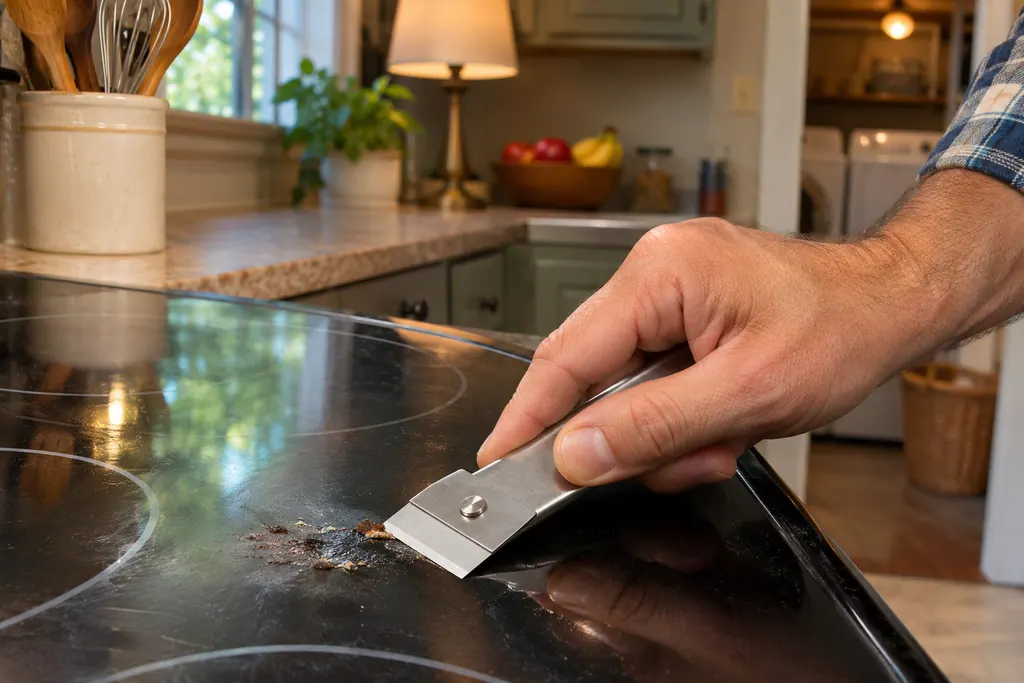
The troubleshooting table gives the same advice for brown streaks or specks: boilovers cooked onto the surface, to be lifted with a razor blade scraper. 12
What do I do about sugar or melted plastic?#
Remove it immediately. The guide says pitting and other permanent damage can follow if sugar or plastic cools on the glass. Turn the elements off, then scrape the spill off the hot surface with a razor scraper or a metal spatula, using a mitt. 1
This is the one case where the guide has you work on a hot surface. Once the cooktop has cooled, use the same cream-and-scraper method on whatever is left, as for burned-on soil. 1
Why does my cooktop have silver streaks or a metallic sheen?#
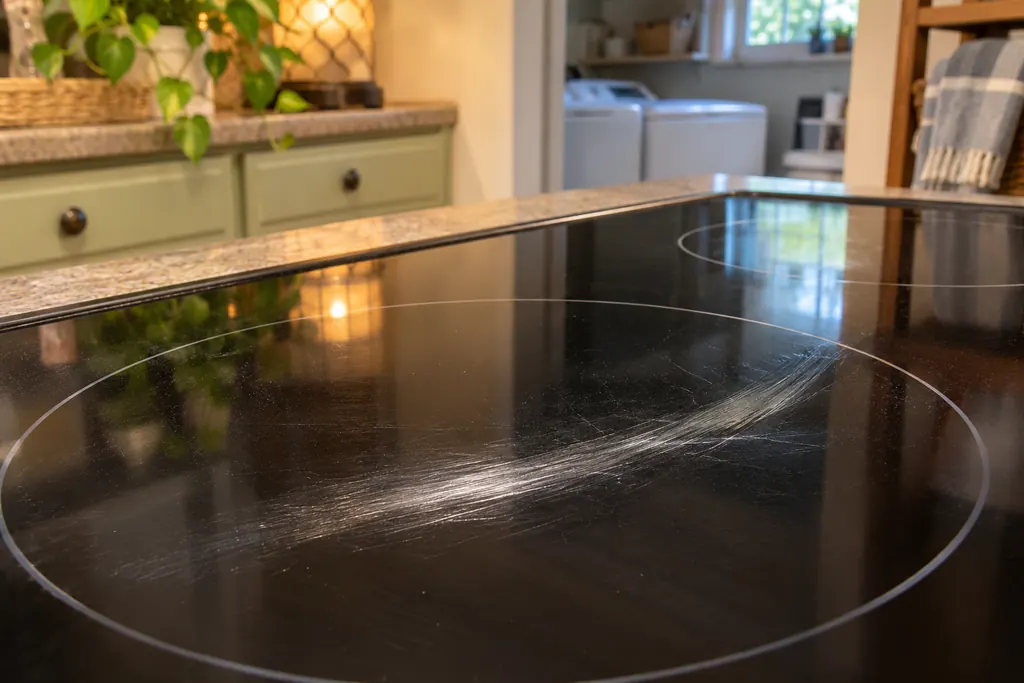
They are two different things. Silver streaks are metal marks from sliding aluminum or copper-clad pans. A metallic sheen is mineral deposit from water and food. The cream removes both. 12
| Sign | Cause per the guide | Fix |
|---|---|---|
| Silver streaks | Metal marks from sliding aluminum or copper-clad pans 12 | Remove with the cream once the cooktop is cool; they can become permanent if left 1 |
| Areas of color with a metallic sheen | Mineral deposits from water and food 12 | Cream; cook with pans that have clean, dry bottoms 12 |
| Brown streaks or specks | Boilovers cooked onto the surface 12 | Cream, pad, then a razor scraper 12 |
| Small scratches | Coarse particles such as salt or sand between the cooktop and the pan 12 | Keep the surface and pan bottoms clean; small scratches do not affect cooking and fade with time 12 |
What should never touch the glass?#
Abrasive cleaners, harsh chemicals, dirty cloths and foil. The guide lists each, and the reasons are specific: they scratch, etch, leave lint that burns, or melt into the surface. 1
- Abrasive pads and cleaners. Metal and some nylon scouring pads can scratch the glass and make it harder to clean. 1
- Chlorine bleach, ammonia and oven cleaners. They can etch or discolor the cooktop. 1
- Dirty sponges, cloths and paper towels. They can leave soil or lint that burns and causes discoloration. 1
- Aluminum foil. It damages the cooktop, and the guide says not to use it under any circumstances. 1
- Aluminum pans that boil dry. Aluminum melts at a lower temperature than other metals, and a pan that boils dry can break, fuse to or mark the glass. 1
The same page warns about cookware. Cast iron, metal, ceramic or glass with rough bottoms can mark or scratch the cooktop, so do not slide them. Do not use the cooktop as a cutting board, do not cook on it without a pan, and do not drop heavy objects on it, because they can crack the glass. 12
Which cookware keeps the glass looking good?#
Smooth, flat-bottomed pans with clean, dry bottoms. The troubleshooting table gives that advice for scratches and for the metallic sheen, and the guide adds that rough bottoms can mark the glass. 12
Three habits follow from the guide. Lift pans rather than sliding them, so that aluminum and copper-clad bottoms do not leave metal marks. Wipe pan bottoms before you set them down, since salt or sand under a pan is what scratches the surface. And keep a pan from boiling dry, which is when aluminum does its worst. 12
That is a short list, and it covers most of the damage the guide describes. The rest comes from the wrong cleaner or from a spill left to cook on.
Can a damaged cooktop be cleaned back to new?#
Not always. Pitting from melted sugar or plastic, etching from the wrong cleaner and cracks are damage, not dirt. Scrubbing harder will not undo them, and a cracked cooktop is one for a technician to look at. 1
The guide does not give a repair step for a cracked or pitted surface. It tells you to avoid the damage in the first place, which is what the table and the list above are for.
The technician agrees the price with you before any work starts. The exact cost is confirmed after the on-site diagnostic. For the whole range, see the range service page, and for an element that will not heat, the burner problems page.
Sources#
- Use & Care Guide, Kenmore Elite dual-fuel slide-in range 790.4103/4104Kenmore / Sears Brands · Document L0810108 (part 318203893 Rev. A) · pp. 43-44 (Ceramic Glass Cooktop Cleaning and Maintenance), 46-47 (Before You Call)
- Use & Care Guide, Kenmore range 790.7540Kenmore / Sears Brands · Document 1608081L (part 318200773 Rev. A) · pp. 25 (Ceramic Glass Cooktop Cleaning and Maintenance), 28-29 (Before You Call)