On this page
- Only HE detergent; non-HE can cause oversudsing, errors and cycle failure. 13
- An average load needs less than half the maker's maximum, and most loads no more than a quarter to a half cap. 12
- A suds message makes the washer run a clearing routine, which can add about two hours on a 796 front-loader. 14
- On a Calypso suds lock, add no detergent and use cold water to restart. 3
- Detergent goes in the dispenser, never straight on the clothes or into the drum. 13
Why does a Kenmore washer need HE detergent?#
Kenmore's washer guides all say the same thing: use only High-Efficiency (HE) detergent. HE detergent makes fewer suds, and these washers are built around that. The Calypso guide says its wash action and low water level create too much sudsing with an ordinary detergent. 13
The 796 front-load guide says non-HE detergent may cause oversudsing and poor performance, which could lead to error codes, cycle failure and machine damage. 1 The Calypso guide lists errors, longer cycles, poor rinsing, component failures and noticeable mold or mildew. 3
Look for the HE symbol on the bottle. A product marked "HE compatible" is not the same thing, and the 796 guide warns that it may not give optimal results. 1
What is the right dose of HE detergent?#
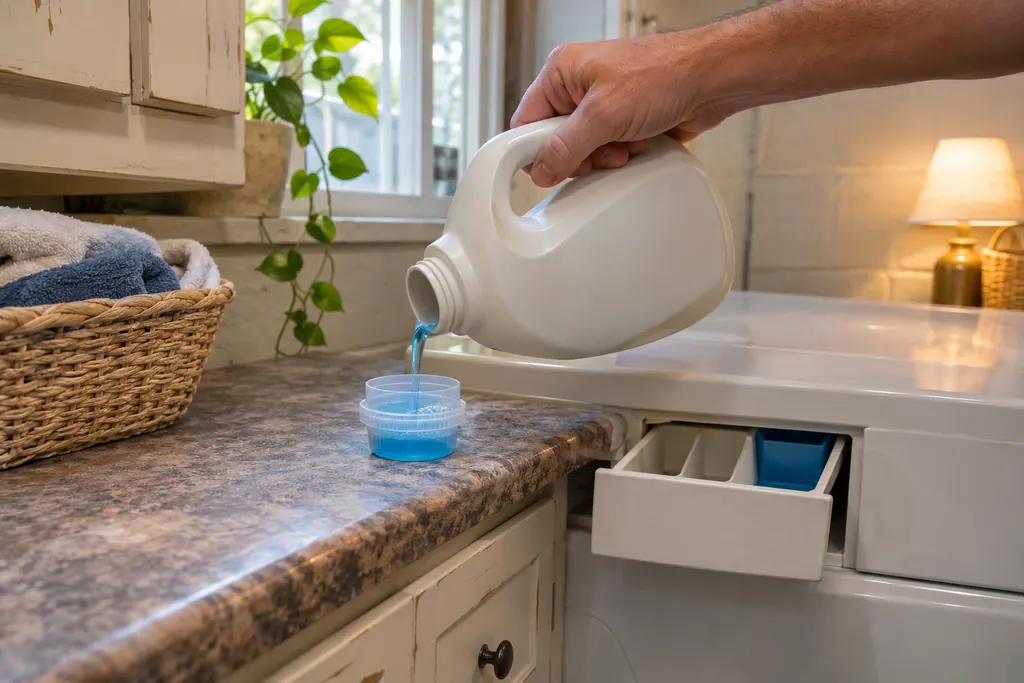
For an average load on a 796, use less than half of the maker's recommended maximum. For most normal loads that works out to a quarter to a half of a cap or scoop. Never go above the maximum on the bottle. 12
The guide gives several ways to dose down. Use less detergent for soft water, light soil or a smaller load. 1
| Situation | What the guide says | Source |
|---|---|---|
| Average load | Less than half of the recommended maximum; no more than 1/4 to 1/2 cap or scoop for most loads | 12 |
| Soft water, light soil, small load | Use less | 1 |
| 2X and 3X concentrates | Extra care, because even a little extra causes problems | 12 |
| Any detergent | Never more than the maker's maximum | 12 |
| Measuring | Use the cup or scoop the maker supplies, never another one | 12 |
The 796 top-load guide puts it in one line: always use as little detergent as possible, because high-efficiency washers need very little. 2
Does soft water change the dose?#
Yes. The guide says to use less for soft water. It gives no separate figure for it, so measure with the maker's cap and stay at the low end. 1
The guide does not give a different number for hard water. It only says that hard water can leave scale on internal parts, and it recommends a water softener in hard-water areas. 1
Which compartment does each product go in?#
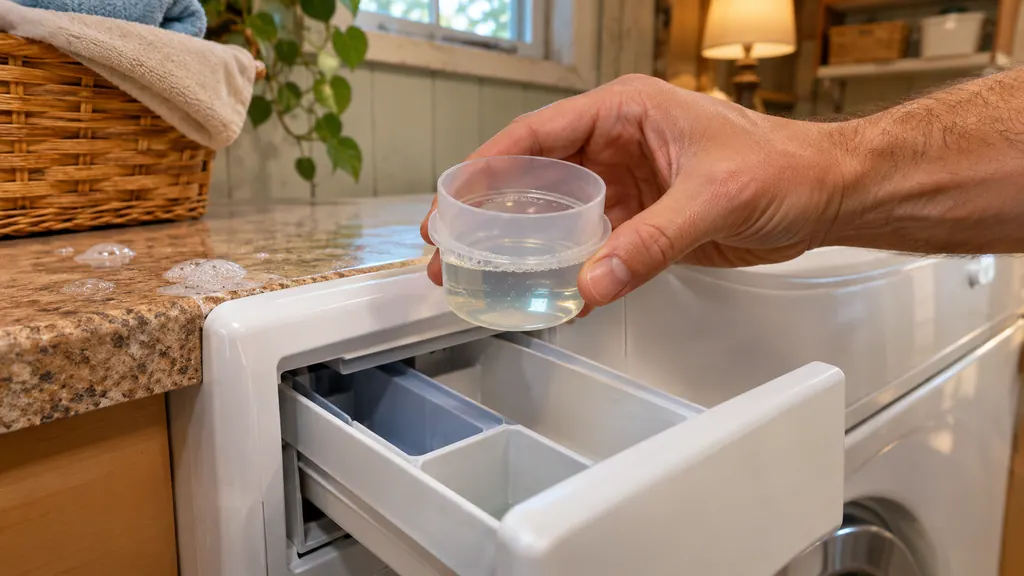
Into the dispenser drawer, not onto the clothes and not into the drum. Open the drawer, put each product in its own compartment and close the drawer before you start the cycle. 13
The compartments matter. On the 796 front-loader, bleach or softener that lands in the drum is a listed cause of staining, as is an overfilled compartment or a drawer closed too quickly. 1
- 1
- 2
- 3
- 4
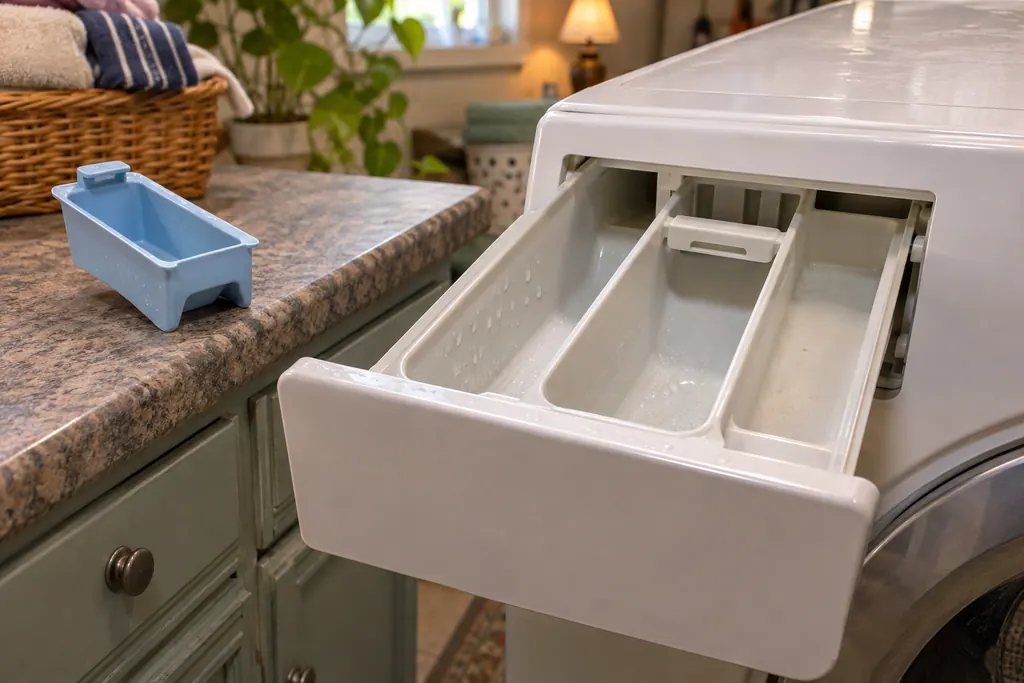
Do not leave detergent, bleach or softener on top of the washer or dryer. The 796 guide says they can damage the finish and the controls, so wipe up spills at once. 1
What do SL, SUD and the 796 suds message mean?#
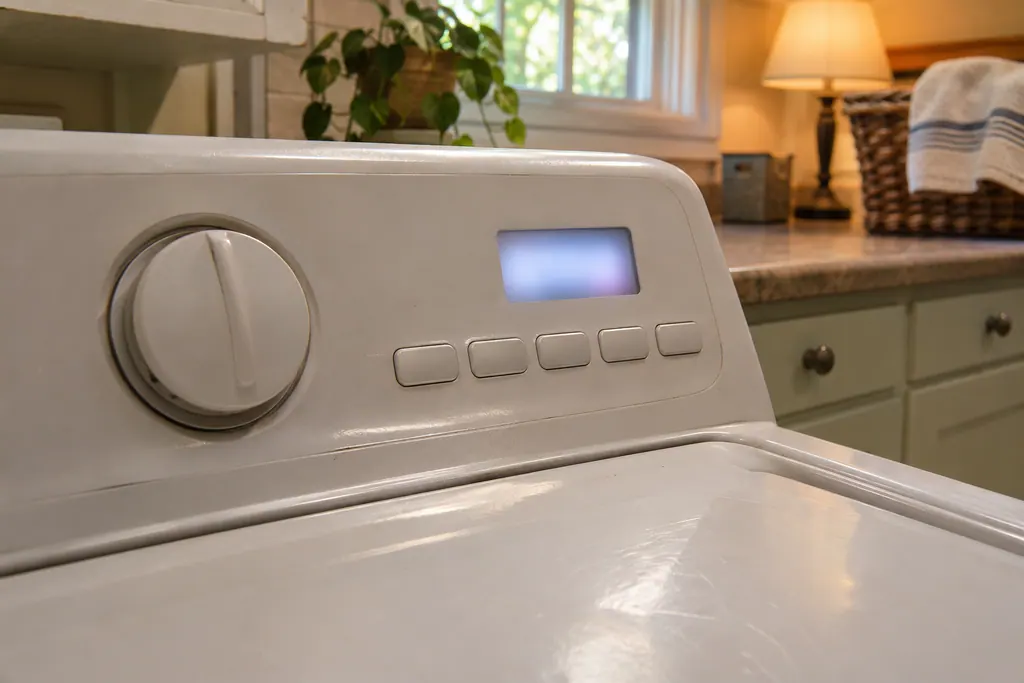
They all mean the washer sensed too many suds. The Calypso shows SL (Suds Lock), the 110 front-loader shows SUD, and the 796 front-loader shows a suds message and adds a Suds Reducing cycle of about two hours. 134
| Washer | What you see | What the washer does |
|---|---|---|
| 110 Calypso top-load | SL | Stops; the guide says to clear the display with STOP/CANCEL 3 |
| 110 front-load | SUD, shown during rinsing and at the end | A suds routine starts by itself to remove the extra suds and to make sure the clothes rinse 4 |
| 796 front-load | The suds message | Adds a Suds Reducing cycle, about two hours; if suds appear during the spin, the washer stops to prevent leaking 1 |
| 796 top-load | The guide lists oversudsing under a washer that will not drain, and says it may create leaks | Try less detergent 2 |
The washer's own message is shown in full on the Sd, SUD and SL page.
What do I do after a suds message?#
Cut the dose, let the washer clear the suds, and use HE detergent next time. The steps differ by family, so follow the one that matches yours. 134
On a 796 front-loader#
The guide says to turn the washer off and on, then run Rinse & Spin to remove the suds. Do not add more than the maker's recommended amount of detergent afterward. 1
If the washer adds the Suds Reducing cycle itself, let it finish. It lengthens the cycle by about two hours, so a long run after a heavy dose is expected. 1
On a Calypso#
Press STOP/CANCEL to clear the display. For an extended-spin load, restart the cycle with no detergent added and use cold water. The guide ends with a reminder to use HE detergent next time. 3
If the washer stops and the cause is oversudsing, the Calypso guide has you cancel the cycle, press RINSE/SPIN to drain, reselect the cycle and press START, again with no detergent and cold water. 3
On a 110 front-loader#
Let the suds routine finish. The guide says it removes the extra suds and assures proper rinsing, and that SUD is displayed to tell you it ran. It repeats that you should use only HE detergent. 4
Could too much detergent explain a smell or a leak?#
It can. The guides link too much detergent to residue, odors and leaks. The 796 front-load guide says detergent buildup can contribute to odors in the machine, and the top-load guide says oversudsing may create leaks. 12
That is why the dose and the monthly care go together. If the washer smells musty, read the monthly care guide after you cut the dose.
When is it not the detergent?#
If a suds message keeps coming back with a small dose of HE detergent, something else is wrong. A drain that does not clear, or a leak, needs a technician. 12
The technician agrees the price with you before any work starts. The exact cost is confirmed after the on-site diagnostic. We also cover this machine on the washer service page.
Sources#
- Use & Care Guide, Kenmore front-load washers 796.4136/4146/4156Kenmore / Transform SR Brands · Document 1909134L (part MFL68005592), no date printed · pp. 26 (Detergent and Dispenser Use), 44-46 (Before Calling for Service)
- Use & Care Guide, Kenmore top-load washer 796.2927Kenmore / Sears Brands · Document 1007244L (part MFL42065471), no date printed · pp. 16-17 (About the Dispenser, Detergent and Dispenser Use), 26 and 30 (Before Calling for Service)
- Use & Care Guide, Kenmore Calypso top-load washers 110.2206Kenmore / Sears Roebuck · Document L0412465 (part 8543703), no date printed · pp. 11 (Washer Use), 18 (Troubleshooting)
- Use & Care Guide, Kenmore front-load washers 110.4708/4709Kenmore / Sears Roebuck · Document L0809415 (part 8183014B), no date printed · p. 22 (Troubleshooting, SUD)