Inside the appliance
Dryer temperature sensor. In plain English.
Kenmore’s 796 dryer guides print one line about the temperature sensor: if the display shows tE1 or tE2, the cause is “Temperature sensor failure,” and the step is to turn off the dryer and get service. They give no owner repair and no reading of what failed.
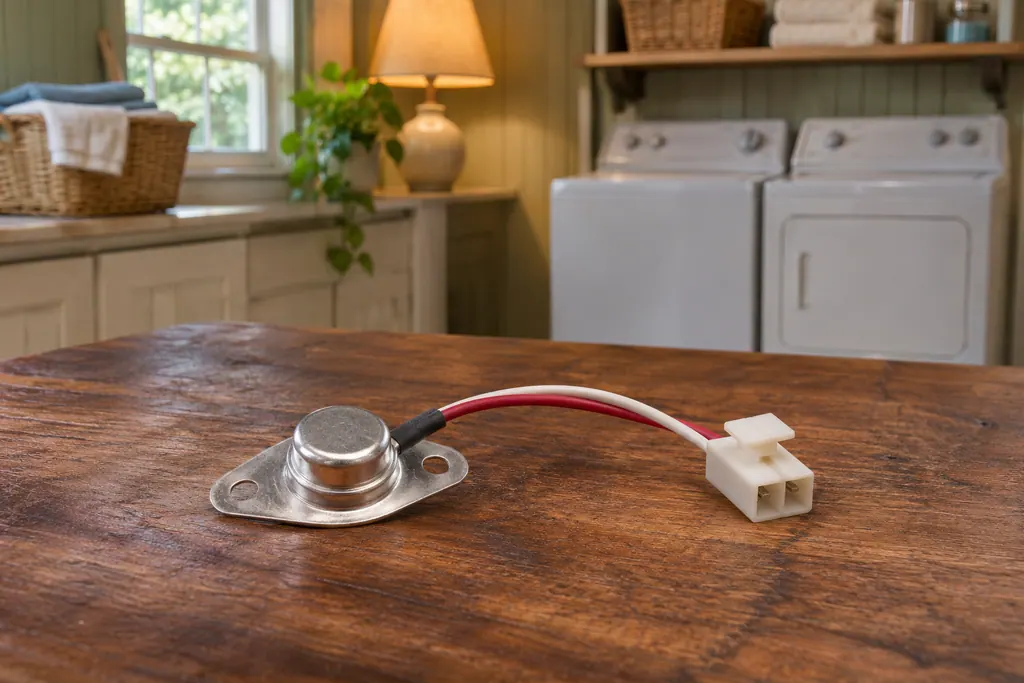
Where it fits.
Dryer temperature sensor in the appliance
The guides don’t show or locate the sensor. It is inside the dryer cabinet and is not a part to open.
The picture shows the type of component. It does not pick out a replacement that fits your model.
What you notice when this system needs attention.
Dryer temperature sensor concerns can show up together with weaker performance or a code that keeps returning. Testing is required before deciding whether the component is to blame.
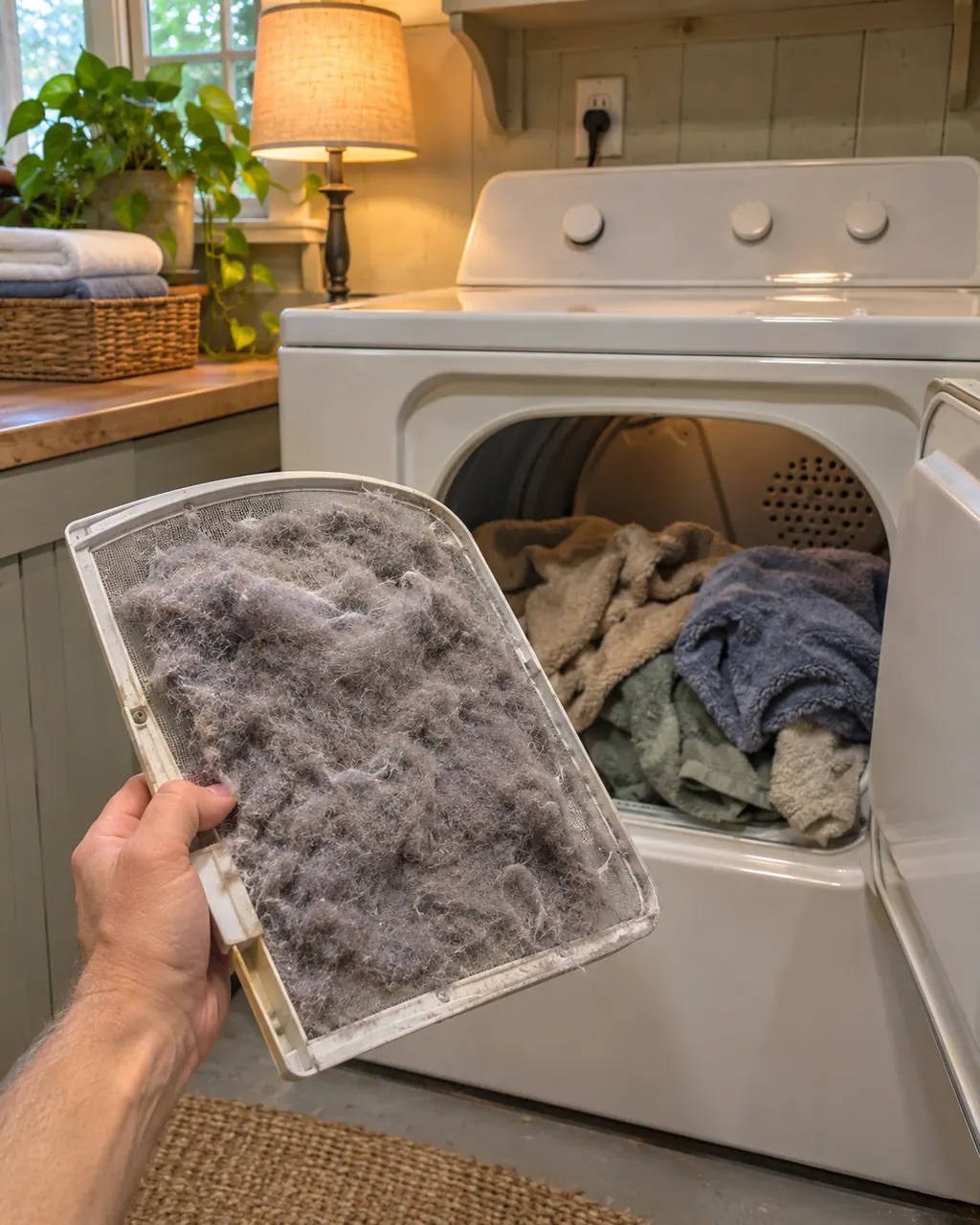
Kenmore dryer takes too long
Long drying on a Kenmore dryer usually traces back to airflow: a clogged lint screen, a crushed or lint-packed exhaust vent, or a vent run that is too long. The guides give a quick test with your hand under the outside hood.
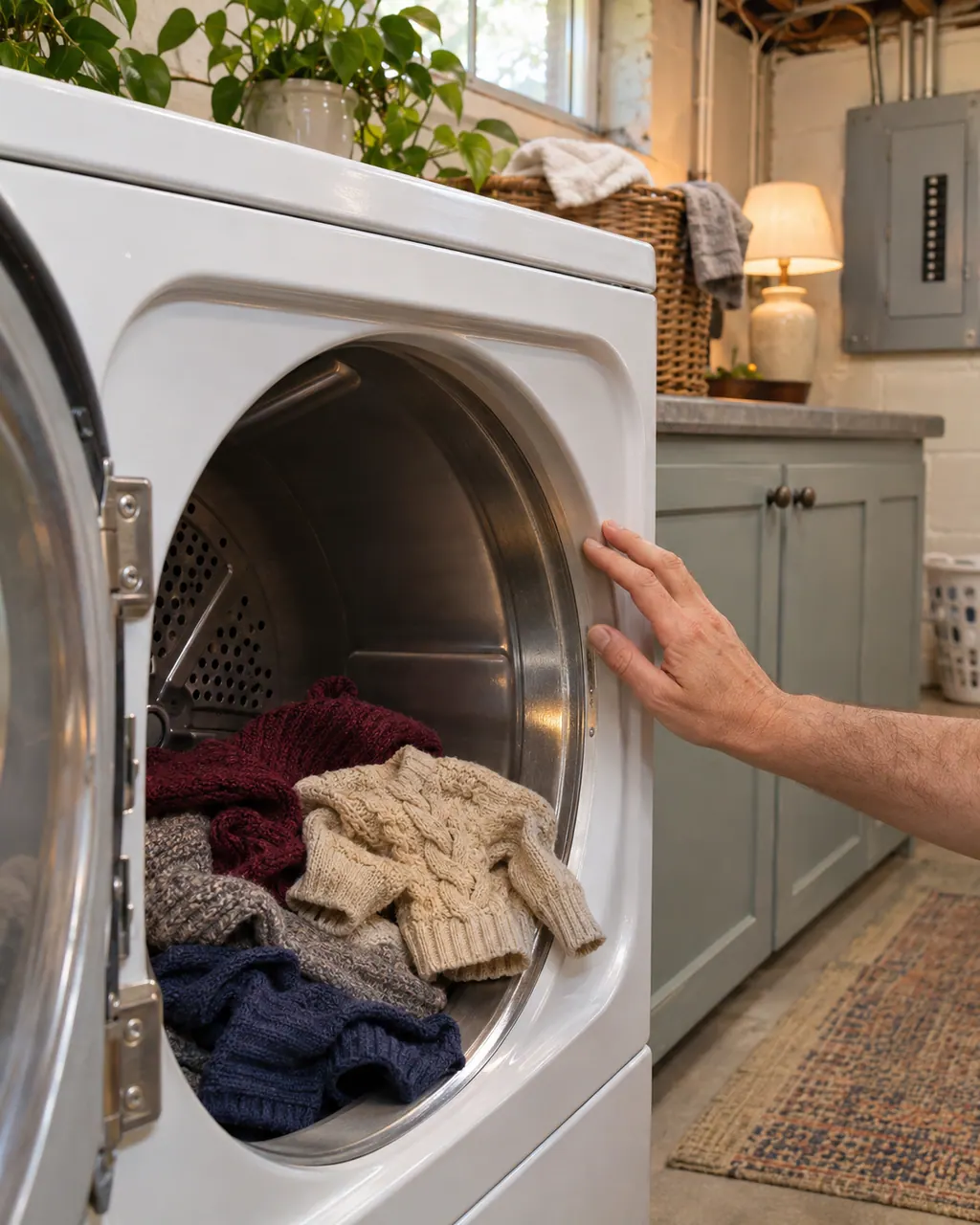
Kenmore dryer temperature problems
A Kenmore dryer that runs too hot, too cool or without heat is covered by three kinds of check in the guides: airflow, the household power supply, and a sensor message. Clear the lint and vent first, then check breakers and the gas valve on gas models.
Owner care, within the model instructions.
Switch the appliance off and unplug it before any owner check. Be careful around standing water and sharp debris. Never touch a wet plug or electrical area, take off service panels, or go past what your model’s owner instructions allow.
- 1
Turn the dryer off
The guides’ only step is to turn the dryer off. Unplug it if you plan to leave it for a while.
- 2
Write down which code
Note whether the display shows tE1 or tE2 and what cycle you had selected.
- 3
Rule out a slow-drying cause
If you have no code and clothes simply dry slowly, start with the lint filter and the exhaust vent instead. The guides list both before anything else.
- 4
Skip the repair
The guides don’t describe a way to test or replace the sensor yourself.
Cleaning or replacement?
Leave internal testing to a technician.
Book a visit if tE1 or tE2 shows. The guides’ next step is service.
Book a visit if the dryer heats unevenly or shuts off early and you cannot clear it with the lint filter and vent.
Arrange a diagnosticSee the neighboring components.
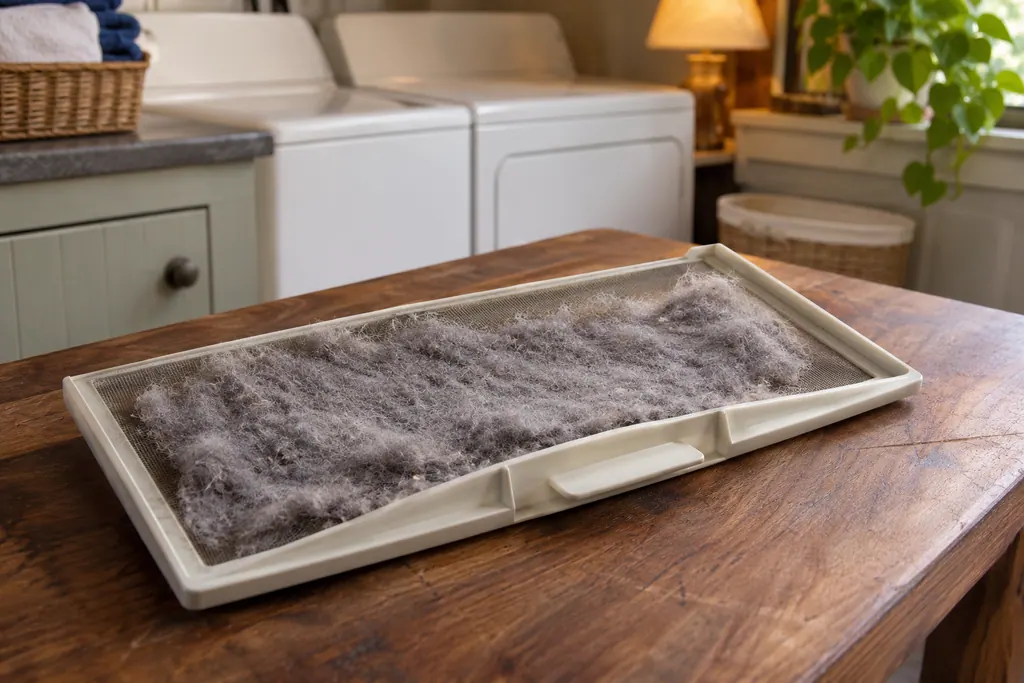
Dryer lint filter
The lint filter is the screen that catches lint before it reaches the exhaust. Kenmore’s dryer guides say to empty it before every load, and the Elite HE guide lists a clogged lint screen first when clothes dry slowly or the load comes out hot. The 796 guide adds a periodic wash.
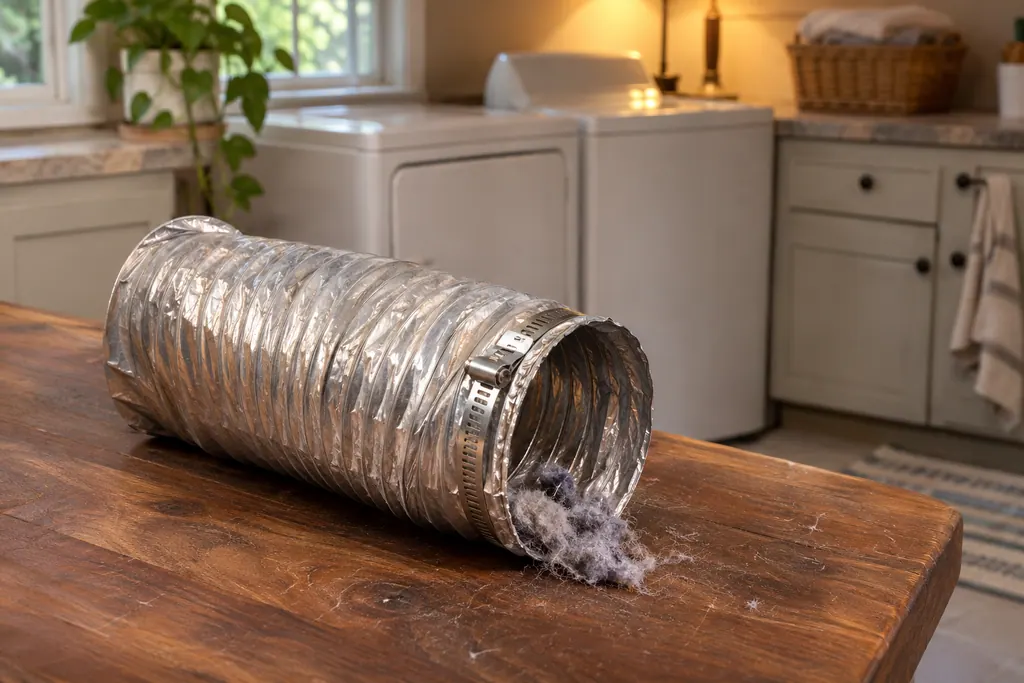
Dryer exhaust vent
The exhaust vent carries hot, moist air outside. The 796 guide calls poor venting the most common cause of dryer problems, and the Elite HE guide’s AF code means the vent may be crushed or blocked. Both guides say to check the vent run and the outside hood for lint.
Sources and model boundaries.
These sources back up the Dryer temperature sensor guidance. Read the manual that fits your model.
- Use & Care Guide, Kenmore dryers 796.8128/9128/8118/9118
- Use & Care Guide, Kenmore steam dryers 796.8138/9138
Go by the instructions for your exact model. Check how we research these pages.
What does tE1 or tE2 mean on a Kenmore dryer?
The 796 dryer guides print it as a temperature sensor failure and say to turn off the dryer. They don’t name which sensor or what caused it.
Can I reset tE1?
The guides give no reset step, only to turn the dryer off and get service. If it returns, book a visit.
Do 110 dryers use tE1?
The 110 guides we checked print PF and an F-variable service rule instead, not tE1 or tE2. Check your model prefix.
Is it the same as a vent problem?
No. A blocked vent shows AF on the Elite HE or a Check Vent light on the 796. tE1 and tE2 are a separate sensor message.
Code, symptom, part or service
Link the message to what comes next.
Kenmore dryer takes too long
Long drying on a Kenmore dryer usually traces back to airflow: a clogged lint screen, a crushed or lint-packed exhaust vent, or a vent run that is too long. The guides give a quick test with your hand under the outside hood.
Dryer lint filter
The lint filter is the screen that catches lint before it reaches the exhaust. Kenmore’s dryer guides say to empty it before every load, and the Elite HE guide lists a clogged lint screen first when clothes dry slowly or the load comes out hot. The 796 guide adds a periodic wash.
Dryer repair
Book a diagnostic for your model, carried out at the appliance.
Find your metro
Office details, and the access information to pass along.