Inside the appliance
Ice maker shut-off arm and ice sensor. In plain English.
The shut-off arm or electronic ice sensor tells the Kenmore ice maker when the bin is full. The 795 guide says to make sure the arm moves freely, or that there is a clear path between the two sensors. Frost on the ice-detecting sensor can also interrupt ice production.
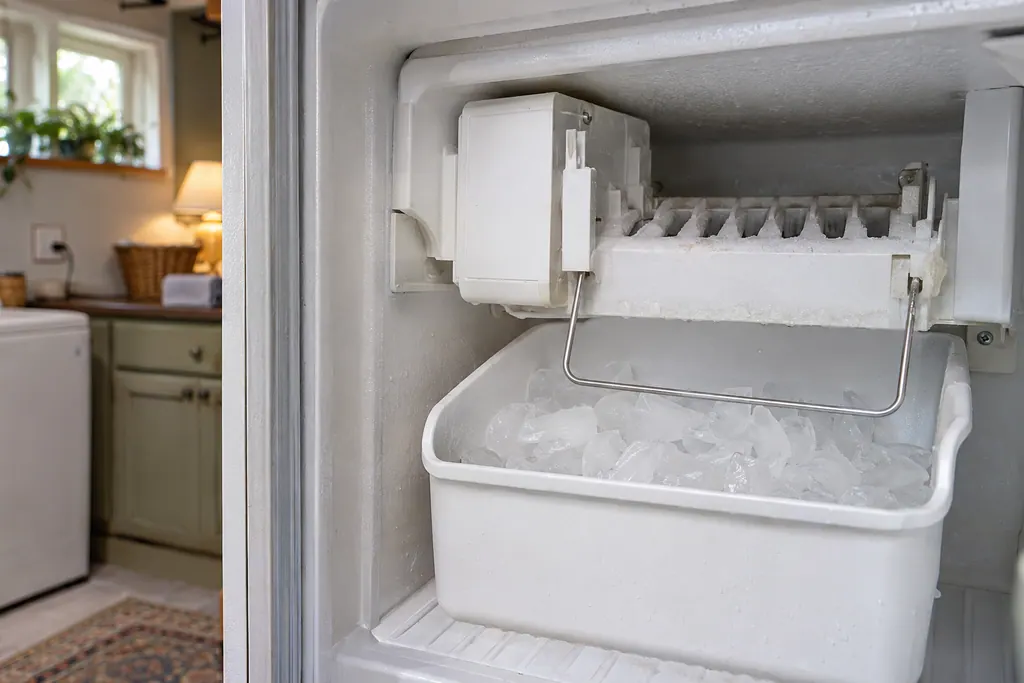
Where it fits.
Ice maker shut-off arm and ice sensor in the appliance
The 795 guide shows the automatic shut-off arm and ice maker power switch on the ice maker assembly in the freezer compartment.
The picture shows the type of component. It does not pick out a replacement that fits your model.
What you notice when this system needs attention.
Ice maker shut-off arm and ice sensor concerns can show up together with weaker performance or a code that keeps returning. Testing is required before deciding whether the component is to blame.
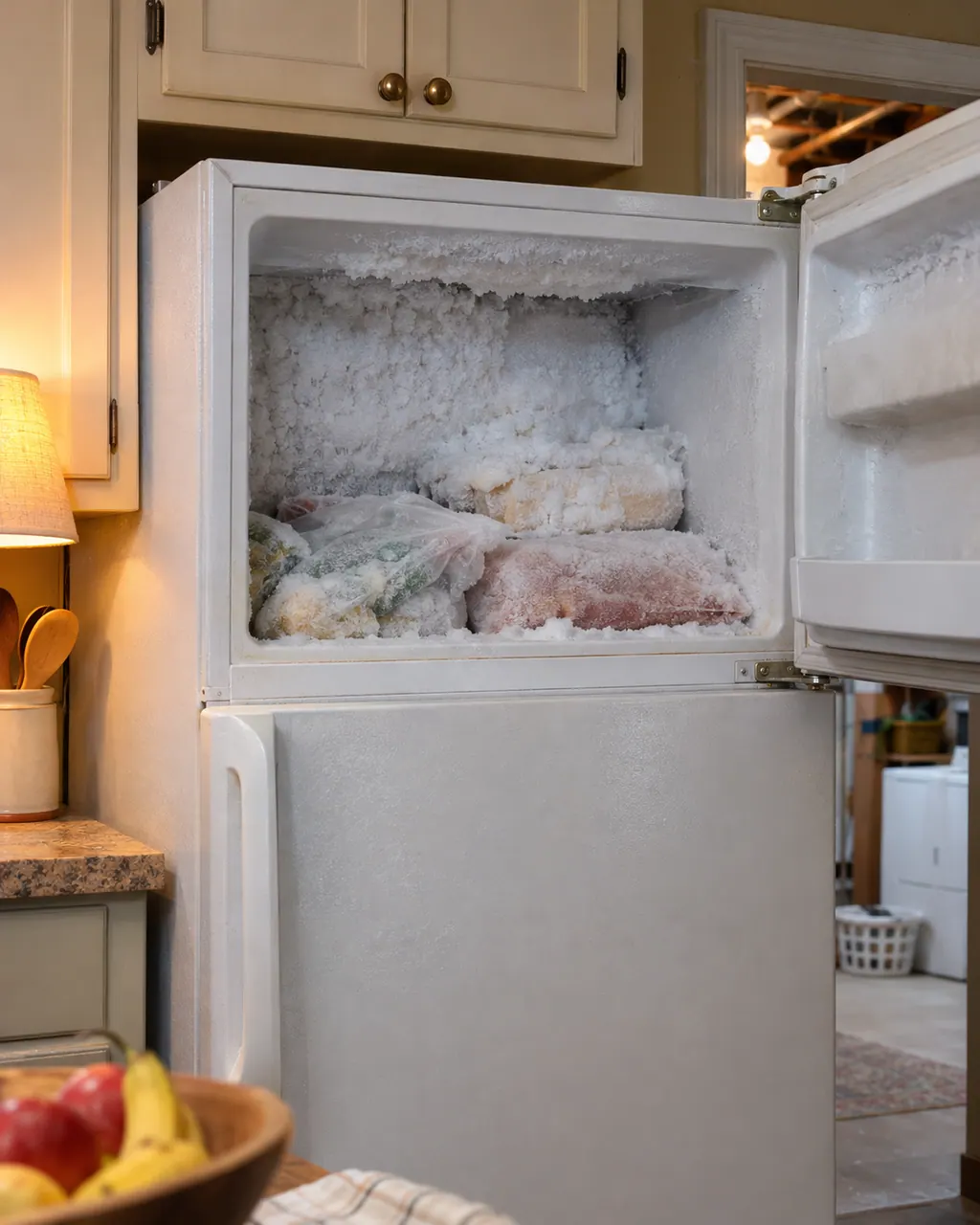
Kenmore refrigerator frost buildup
Frost in a Kenmore 795 refrigerator mostly comes from moist air getting in: doors opened often, doors that do not close fully, humid weather or unwrapped food. The guide treats frost inside sealed packages as normal for wet foods stored too long.
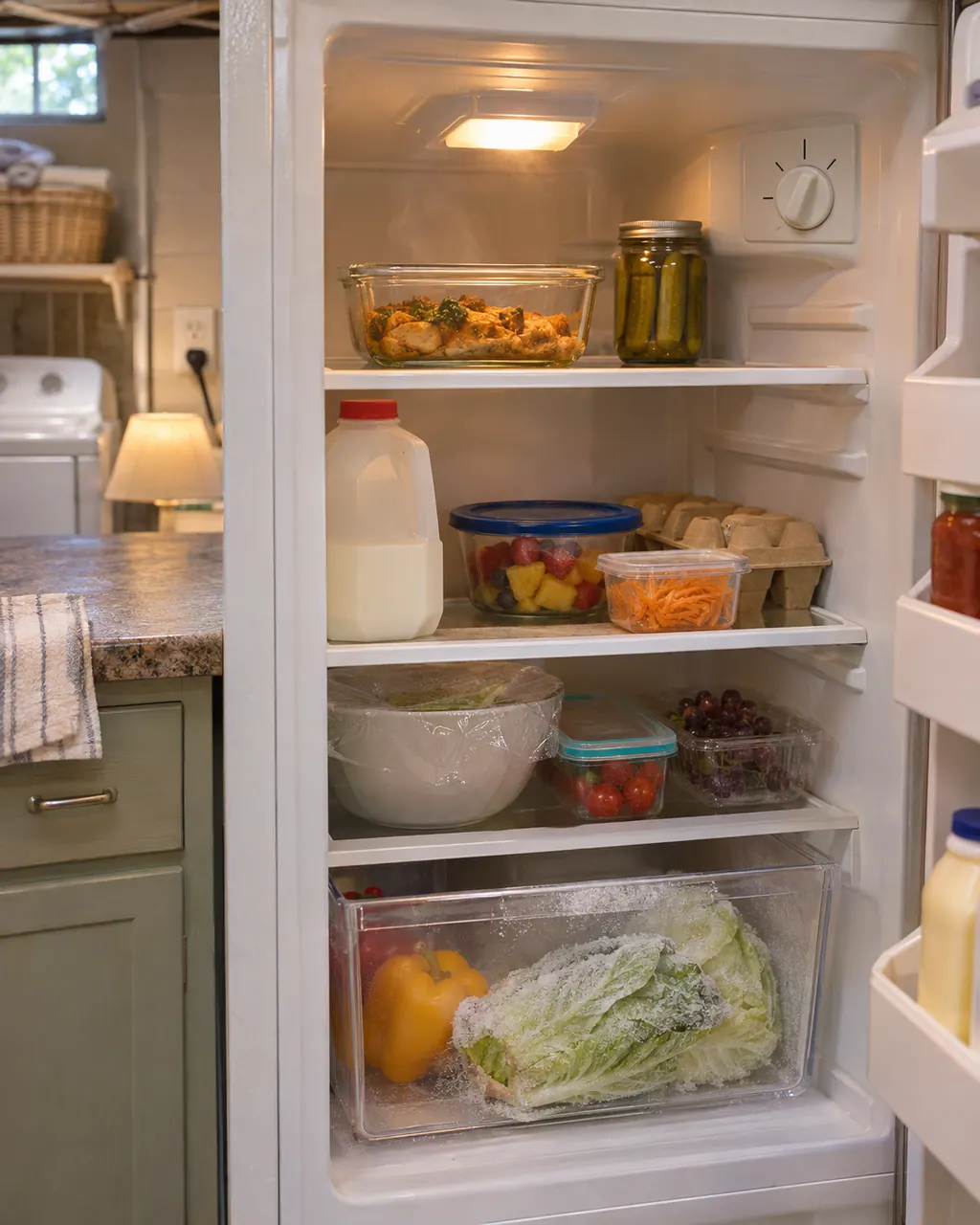
Kenmore refrigerator temperature problems
For a Kenmore 795 refrigerator that is too warm, too cold or uneven, the guide lists install time, blocked vents, door openings, hot food, room temperature and the control setting. Adjust one increment at a time and let the temperature settle.
Owner care, within the model instructions.
Switch the appliance off and unplug it before any owner check. Be careful around standing water and sharp debris. Never touch a wet plug or electrical area, take off service panels, or go past what your model’s owner instructions allow.
- 1
Check the arm
If your ice maker has a shut-off arm, make sure nothing blocks its sweep. When the bin fills to the arm, the ice maker stops making ice.
- 2
Clear the sensor path
On models with the electronic sensor, keep a clear path between the two sensors, and keep the sensor area clean and free of frost.
- 3
Reset a full bin
If it makes too much ice, empty the bin, free the arm or sensor and reinstall the bin. Wait 24 hours to confirm normal operation.
- 4
Use the switch to pause it
Set the switch to OFF when the bin is out for more than a minute or two, and empty the bin when it is switched off.
Cleaning or replacement?
Leave internal testing to a technician.
Book a visit if the ice maker overfills the bin or never stops after the arm and sensor path are clear.
Book a visit if it makes no ice with the switch on, water confirmed and the arm and sensor clear.
Book a visit if the arm is bent or the mechanism sounds wrong. Keep fingers away from it while plugged in.
Arrange a diagnosticSee the neighboring components.
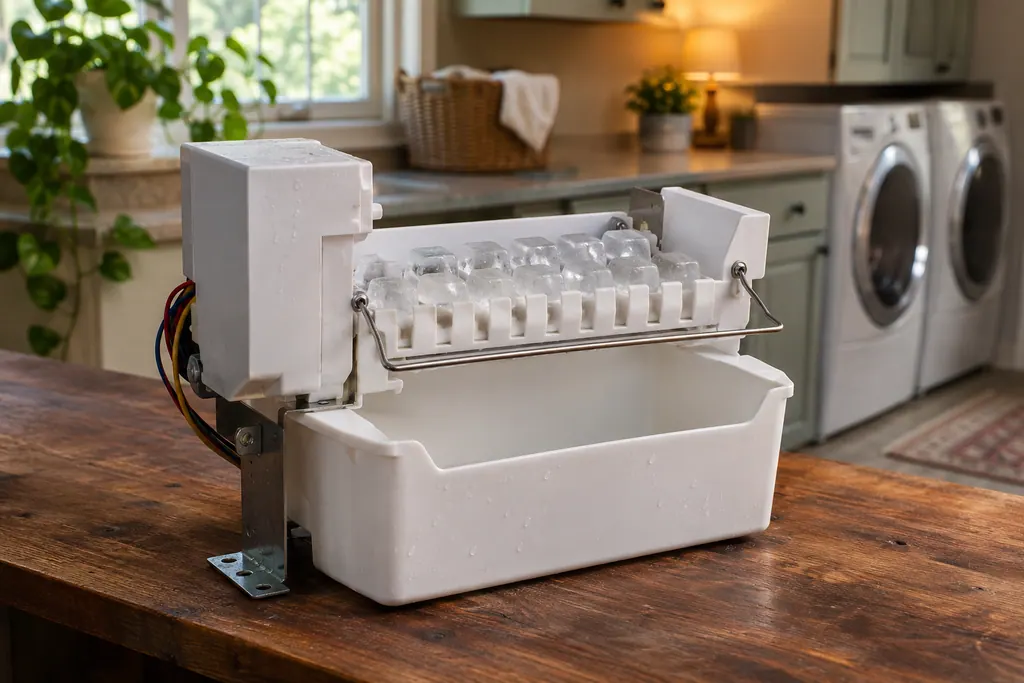
Refrigerator ice maker
The automatic ice maker takes in water, freezes it into cubes and sends them to the bin. The Kenmore 795 guide says a new refrigerator takes 12 to 24 hours to start making ice and 72 hours to reach full output, and lists the switch, the ice sensor, the shut-off arm and the water supply as the usual checks.
Refrigerator water filter
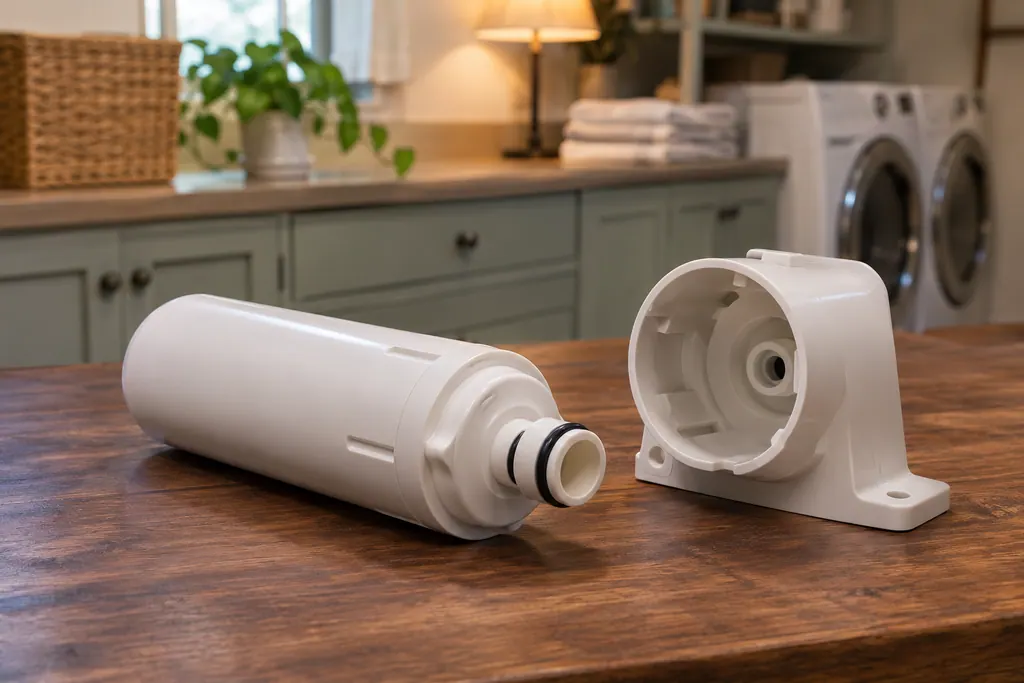
This cartridge treats the water on its way to the dispenser and the ice maker. Kenmore’s refrigerator guides say to replace it about every six months, when the indicator comes on, when dispenser output drops or when the ice cubes get smaller than normal.
Sources and model boundaries.
These sources back up the Ice maker shut-off arm and ice sensor guidance. Read the manual that fits your model.
- Use & Care Guide, Kenmore Elite refrigerators 795.7802/7804/7902/7904
Go by the instructions for your exact model. Check how we research these pages.
How does the ice maker know the bin is full?
The guide says when the bin fills to the level of the automatic shut-off arm, the ice maker stops. Electronic models use a pair of sensors instead.
Why is it making too much ice?
The guide lists an obstructed shut-off arm or sensor. Empty the bin, clear the arm or sensor path and wait 24 hours.
Why is no ice being made?
The guide lists the switch being off, an obstructed or frosty sensor, no water supply, low pressure and a freezer warmer than 0°F.
Is it safe to touch the mechanism?
No. The guide warns not to place fingers or hands on the automatic ice-making mechanism while the refrigerator is plugged in.
Code, symptom, part or service
Link the message to what comes next.
Kenmore ice maker not making ice
For a Kenmore bottom-freezer ice maker that makes nothing, the guide lists a fresh install, the power switch, a dirty ice sensor, no water supply, a blocked shut-off arm or sensor, and reverse osmosis pressure. A new unit can take 12 to 24 hours to make ice.
Ice maker repair
Book a diagnostic for your model, carried out at the appliance.
Find your metro
Office details, and the access information to pass along.