On this page
- Frequent or long door openings and a door that does not close properly lead to frost and condensation. 1
- Drawers or the Durabase put back wrongly can keep the freezer door from closing. 1
- Frost inside a sealed package is normal for foods with a lot of water in them. 1
- Change a setting one step at a time and wait 24 hours. 12
- The guides print no code table, so F dH has no meaning in them. 12
Why is there frost in my Kenmore bottom-freezer?#
Frost forms when warm, damp air gets into the cold compartment and freezes. The Kenmore 795 guides name frequent or long door openings, a door that does not close properly, humid weather and food that is not wrapped well. 12
That is good news, because each of those is something you can fix in a few minutes. None of them points to a failed part.
This guide follows the troubleshooting tables in the Kenmore Elite 795.7802 guide, which the older 795.7248 guide repeats. For any other Kenmore refrigerator, read the matching page in your own manual first. 12
What counts as normal#
Both sections of these refrigerators defrost on their own. During the defrost cycle the temperature of each compartment may rise slightly and the back wall may get damp. The guide says to wait 30 minutes and then check that the temperature has come back. 1
You may also hear the defrost control click when the cycle starts and ends, a sizzle when water drips on the defrost heater, and dripping as water runs into the drain pan. The guide lists all of these as normal operation. 1
Frost on food and frost on the walls#
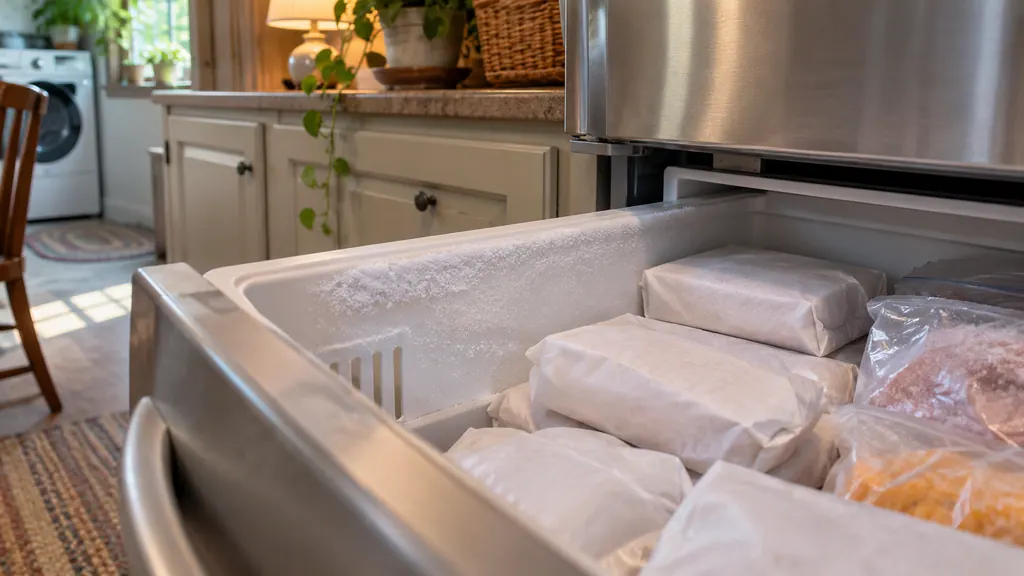
The guide's rows are about frost on the food. Frost or ice crystals on the outside of a package come from door openings or a door that does not close properly. Crystals inside a sealed package come from water in the food itself and are called normal. 1
The guide has no separate row for frost on the freezer walls. Treat it the same way, because the cause it names is the same: moist air getting in. 1
Can the door or the freezer drawer cause frost?#
Yes. A door that does not close completely lets humid air in every minute. The guide lists the reasons a door will not close: food blocking it, bins or drawers out of position, doors put back wrongly after removal and a cabinet that is not level. 1
Work through them in this order.
- 1
- 2
- 3
- 4
- 5
What about the door alarm?#
When a door stays open for more than 60 seconds the alarm sounds, and it stops when you close the door. If you hear it, the door is not shutting, so go through the list above. 1
The alarm is on when power is first connected, and you can switch it off with the Door Alarm button. If you did that, you will not hear a warning. 1
Why a gasket matters#
The gasket is the rubber seal around the door. The care section says to wash gaskets with a clean sponge or soft cloth and mild detergent in warm water. It warns against cleaning waxes, concentrated detergents, bleach and cleaners with petroleum in them. 12
How do I stop frost from coming back?#
Open the doors less often and for less time, wrap everything you store, keep the air vents clear and change the temperature settings only one step at a time. The guide ties frost and moisture to all four. 12
Door openings and humid weather#
Each time a door is open, warm, humid air enters and raises the temperature and the moisture level. The guide says to cut down how often and how long the doors are open. In humid weather, keeping the humidity in the home reasonable helps. 1
Wrapping and airflow#
Food stored uncovered, and damp containers, lead to moisture inside each compartment. The guide says to wipe containers dry and store food in sealed packaging. 1
Do not block the air vents while packing the refrigerator. Blocked vents restrict airflow and can make the temperature too warm or cause moisture to build up. 1
Settings#
The freezer control runs from minus 6°F to 8°F, and the refrigerator control from 33°F to 46°F. Press the button to move one step. Wait 24 hours before you adjust again. 12
Setting the freezer colder than you need is its own entry in the guide's tables: a freezer that is too cold. The fix is the same, one step at a time. 1
| What you see | What the guide says | What to do |
|---|---|---|
| Frost on the outside of food packages | Doors opened often or for long, or a door not closing properly 1 | Cut door time, clear the door, wipe the gasket |
| Crystals inside a sealed package | Water in the food froze inside the package; normal 1 | Do not keep high-water foods in the freezer for a long time |
| Moisture or frost on the walls | Humid weather, door not closed, unwrapped food, recent defrost 1 | Wrap food, close doors, wait 30 minutes after defrost |
| Freezer too cold | Setting incorrect 1 | One step warmer, wait 24 hours |
What does F dH mean on a Kenmore refrigerator?#
The Kenmore 795 guides do not say. They print no table of F or Er messages, so F dH has no meaning in them. We will not guess, and we do not copy meanings from parts-seller charts. Write down the exact message and book a visit. 12
What the guides do print on the display side is short: a door alarm after 60 seconds, a store Demo Mode shown as OFF on the control pad, and the cooling and ice troubleshooting tables. 12
Our page on Kenmore refrigerator codes without a printed meaning lists the other messages people search for, such as Er CO, and says what to write down.
What to write down before you call#
Copy the whole message exactly, note the model number from the label, and say whether the refrigerator and the freezer are both cold. If the doors are closed and the unit is still warm, tell us that too.
Can I chip away the ice or defrost the freezer myself?#
The 795 guides describe no manual defrost and no ice removal for this model. They say the freezer defrosts automatically. Do not chip at ice with a tool, because it can damage the lining and the cooling parts behind it. 1
When the guide says to clean the inside walls, it says to unplug the refrigerator, let the freezer warm up so the cloth will not stick, use a non-flammable cleaner and not spray water inside. 12
When should I book a technician?#
Book a visit if frost comes back after the door, drawers, gaskets, wrapping and settings are right, if a code stays on the display, or if the refrigerator or freezer is not cooling. A visit finds causes the guide does not list. 1
Tell us what you already tried. That saves time on site, and it means we do not repeat checks you have done.
Start with a visit booking, our refrigerator service page or the frost build-up problem page. The technician agrees the price with you before any work starts. The exact cost is confirmed after the on-site diagnostic. If your unit is under the manufacturer's warranty, the manufacturer handles that repair. We give a warranty on our workmanship.
Sources#
- Use & Care Guide, Kenmore Elite bottom-freezer refrigerators 795.7802/7804/7902/7904Kenmore / Sears Brands · Document 1309443L (part MFL67851301), no date printed · pp. 26 (Setting the Controls), 27 (Door Alarm), 34 (Pullout Drawer, Durabase), 35 (Door Liners and Gaskets), 40-42 (Cooling troubleshooting), 45 (Noise), 46 (Doors)
- Use & Care Guide, Kenmore bottom-freezer refrigerator 795.7248Kenmore / Transform SR Brands · Document 1912123L (part MFL62184470), Rev. 07, no date printed · pp. 19 (Setting the Controls), 36 (Door Liners and Gaskets), 41-43 (Troubleshooting)